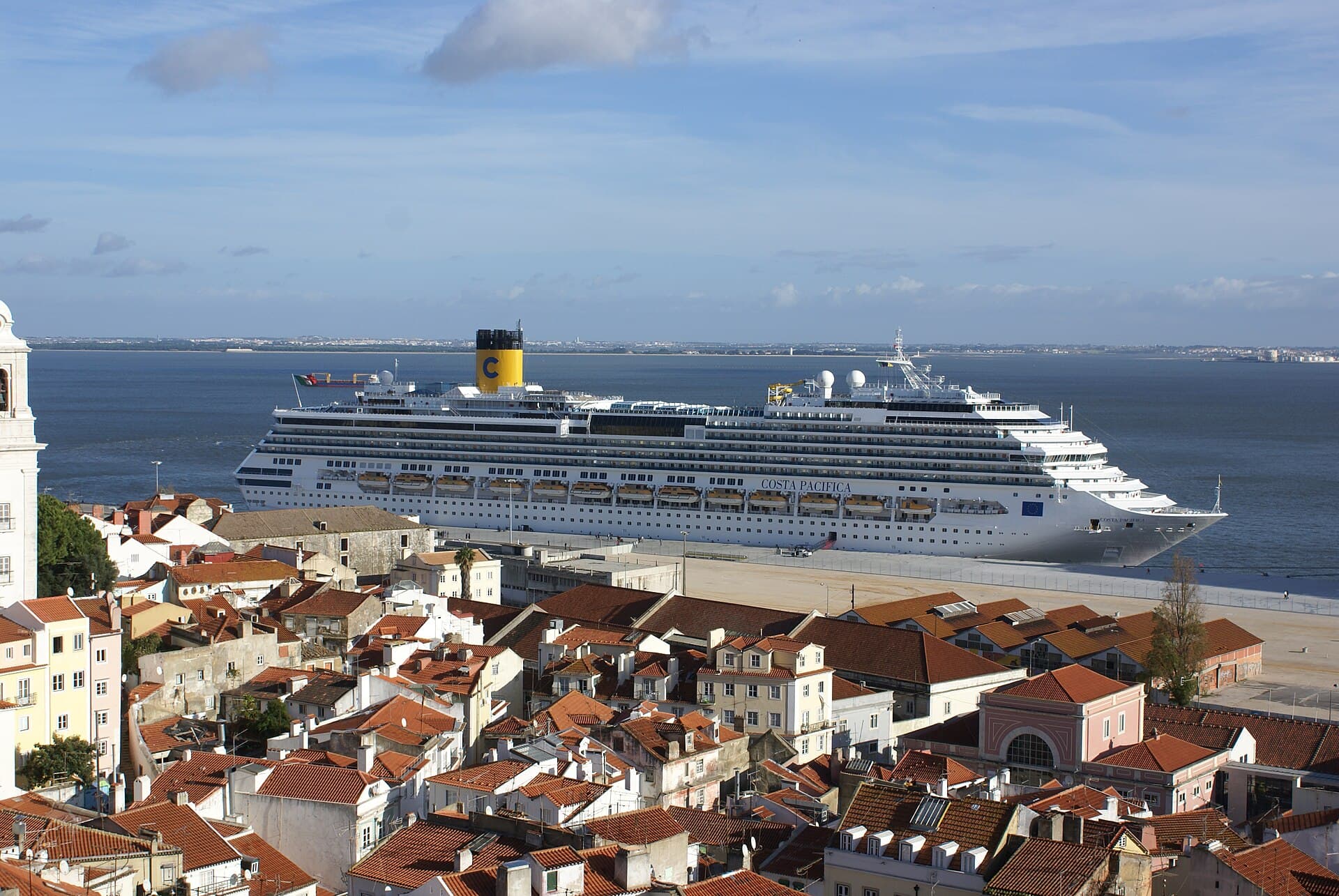
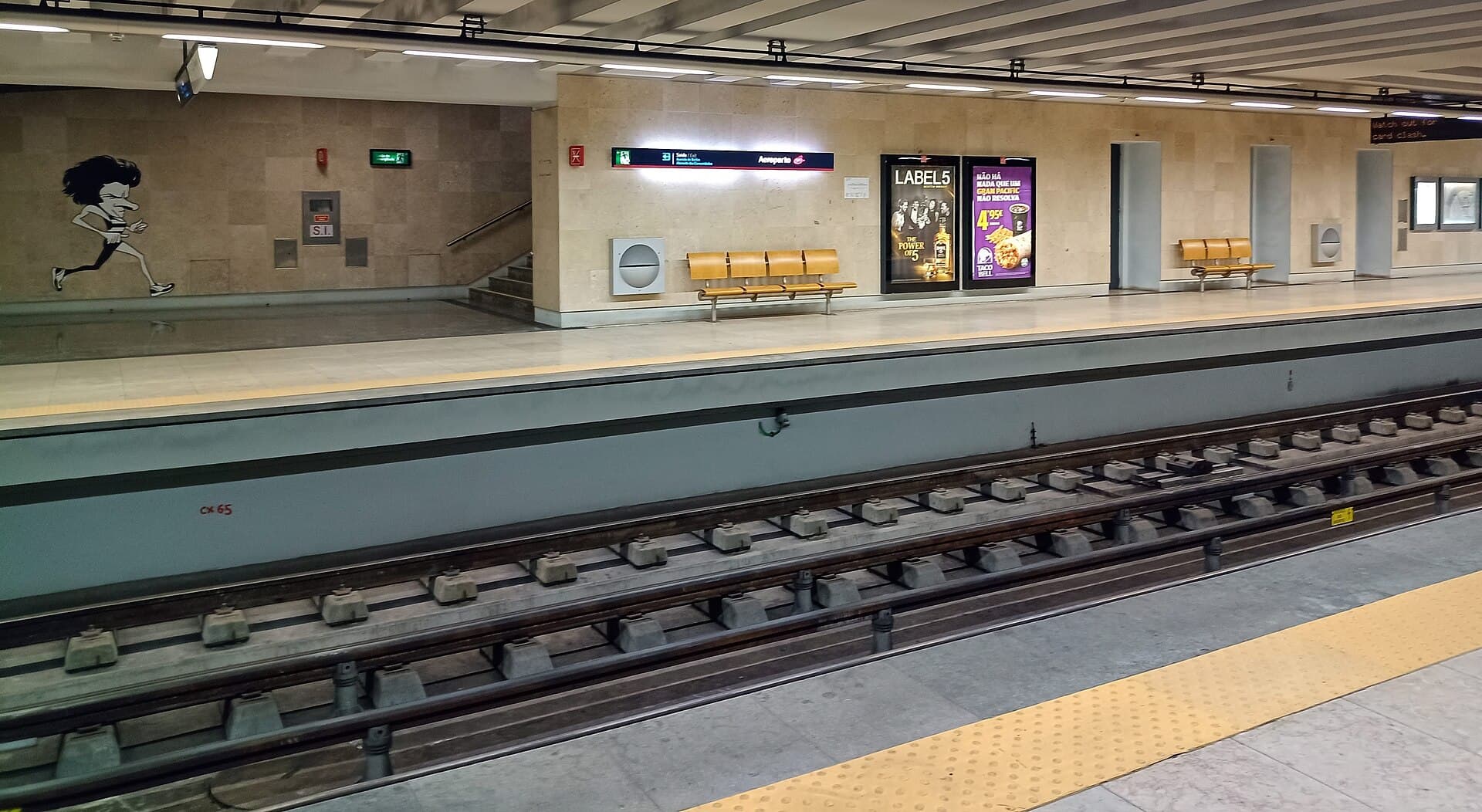
The best way from Lisbon Airport to the city center depends less on the airport and more on the last stretch to your hotel. A metro ride to a flat Baixa or Saldanha stay can be easy and cheap. The same choice becomes much worse if you still need to drag bags uphill through Alfama, Bairro Alto, or a steep Chiado side street. For many travelers, a taxi or rideshare is the smartest arrival-day spend in Lisbon because it removes uncertainty right when the city is most likely to feel awkward.
Good fit if…
- • visitors deciding between metro and car transfer
- • late arrivals or luggage-heavy trips
- • travelers staying in central Lisbon without a rental car
Skip it if…
- • you are specifically planning car rental pickup and onward driving
Map context
Lisbon airport to city center map context
Use this map to compare the airport, metro anchors, and the final neighborhoods that decide whether public transport feels easy or annoying.
Humberto Delgado Airport
Northeast Lisbon
transportArrival point and the start of the red-line decision tree.
Open Humberto Delgado Airport in Google MapsSaldanha Station
Central-north Lisbon
transportUseful interchange and one of the easiest airport-connected hotel zones.
Open Saldanha Station in Google MapsBaixa-Chiado Metro Station
Central Lisbon
transportImportant for central stays, though some hotels still add a tricky final slope.
Open Baixa-Chiado Metro Station in Google MapsRossio
Central Lisbon
landmarkHelpful orientation point when judging whether the center-side final walk is actually easy.
Open Rossio in Google MapsSanta Apolónia Station
East Lisbon
transportRelevant for some Alfama-edge stays, but not a substitute for checking the uphill last stretch.
Open Santa Apolónia Station in Google MapsCais do Sodré
Riverfront Lisbon
transportUseful if your stay or next-day plans lean toward the river or Cascais line.
Open Cais do Sodré in Google Maps
Bookable ideas
Tours and activities to compare
Use these as a starting point, then verify the meeting point, cancellation terms, group size, and recent reviews before booking.
Private airport transfer to Lisbon hotel
Airport transfer
30-45 minutes- Best for
- Families, late arrivals, and anyone who wants the first hour of the trip handled cleanly.
- Why book
- Useful when you want to move straight from arrivals to your hotel without debugging metro lines, stations, and luggage immediately after landing.
- Watch out
- Check waiting policy, exact neighborhood coverage, and what happens if the car cannot stop right at the building.
Shared shuttle from Lisbon Airport
Airport shuttle
45-75 minutes- Best for
- Budget-conscious travelers with lighter luggage who still want more structure than the metro.
- Why book
- Can be a decent middle ground when your hotel is easy to reach and you want to avoid managing the public-transport side right away.
- Watch out
- Its value drops fast if the route adds many hotel stops or still leaves you with a poor final walk.
Metro and transit card orientation tour or pass
Transit pass / self-guided transfer
30-60 minutes- Best for
- Travelers staying near the red line or comfortable solving public transport immediately after landing.
- Why book
- Best when the metro route to your hotel is simple and you want to set up transit for the rest of the trip at the same time.
- Watch out
- Least useful for hill neighborhoods, multiple bags, or anyone arriving too tired to make “cheap and efficient” feel pleasant.
Trip planning
Check guided options against the timing in this guide.
Use these transfer options when luggage, late arrival, or a hill neighborhood changes the math more than the cheapest possible fare.
Search Lisbon toursExternal partner or booking tool; check locations, terms, and current availability before committing.
Transport note 01
Metro is viable, but only when the rest of the trip lines up
Lisbon's metro can work very well from the airport if your hotel is near a convenient station, you are carrying light luggage, and the final walk is simple. It becomes much less attractive once stairs, steep streets, or a line change followed by a cobbled climb enter the picture. The metro is a good low-cost tool, not a universal best answer.
Transport note 02
Taxi or rideshare is often worth it after a flight
For many visitors, a direct car is the best use of money on day one. You avoid guesswork, save energy, and reduce the chance that the first hour in Lisbon becomes an avoidable hassle. This matters especially for Alfama, Graça, Bairro Alto, and some Príncipe Real or Chiado addresses where the final approach can undo most of the metro savings.

Transport note 03
Private transfer suits groups and stress-sensitive arrivals
A pre-booked transfer makes the most sense when predictability matters more than shaving the fare: families, small groups, late arrivals, or anyone landing tired and wanting a clear handoff. You are not just paying for the drive. You are paying to eliminate decision-making between baggage claim and check-in.
Transport note 04
Choose based on your hotel location, not just the airport
The airport part is easy. The important part is what happens next. A flat Baixa hotel, an apartment inside Alfama, a Saldanha business-style stay, and a Príncipe Real guesthouse all create different arrival experiences even if they are all technically “city center.” Work backward from the hotel door, the nearest realistic drop-off point, and the likely state of your luggage and patience.
Transport note 05
Match transport to your final neighborhood
The metro is strongest for Saldanha, Avenida, Baixa, and some Chiado stays where the station connection is short and sensible. Taxis, rideshares, and transfers become more compelling for Alfama, Graça, Bairro Alto, and addresses with a final uphill stretch on calçada. If the property sits on a pedestrian lane, ask the host which drop-off point drivers actually use. “Nearby” can mean very different things in Lisbon.
Transport note 06
Arrival mistakes to avoid
The classic mistake is optimizing only the headline price. Travelers save a little on the first leg, then lose that advantage to a second ride, a sweaty uphill bag haul, or a confusing self-check-in. Another mistake is assuming metro convenience on paper will feel convenient after a flight. If you are arriving late, carrying multiple bags, or just want a calm start, paying for a direct car is often the better call.
Transport note 07
Use this guide when the last mile into Lisbon matters more than the headline fare
This page is for travelers comparing airport transfer options based on their real final neighborhood, not an abstract city-center dot on a map. It is especially useful if you are staying in a hill neighborhood, arriving after dark, or deciding whether the cheapest option is actually worth the hassle. If you are headed to a flat, metro-friendly hotel and packing light, the answer is simpler and cheaper.
Transport note 08
Match the airport transfer to your final Lisbon neighborhood
Baixa, Saldanha, Avenida, and some lower Chiado stays usually reward the metro if you like public transport and your route is clean. Alfama, Graça, Bairro Alto, and some steeper central addresses usually reward a direct car even when the distance is short. Sunday or late-night timing can also change the equation. The useful question is not “How do I reach central Lisbon?” It is “How do I get from arrivals to my exact door with the least nonsense?”
Transport note 09
Lisbon arrival mistakes that create avoidable stress
Travelers often assume a listing marked “city center” will be easy with luggage. In Lisbon, that may still mean stairs, stone lanes, and a second transition after the metro. Another common mistake is ignoring host instructions until after landing. If the host says to aim for a particular square, gate, or street corner, that note belongs in your transport decision, not in the forgotten details section.
Transport note 10
If you do not want to commit to one arrival method for the whole trip
A smart split strategy is to take a direct car on arrival, then use metro or bus for the outbound trip once you understand the neighborhood and know where the station actually is. This works especially well for first-timers or anyone staying in a hillier area. Arrival and departure do not need to be optimized the same way.